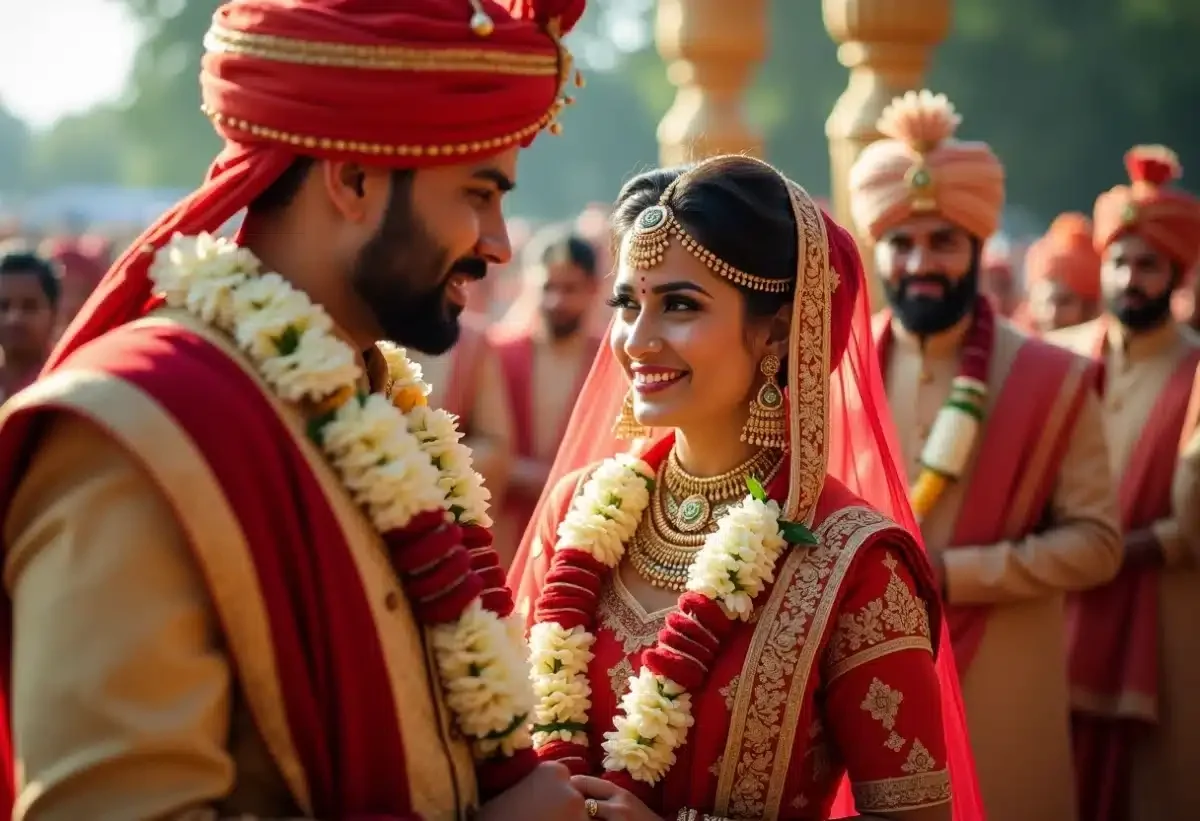
Nuptial unions are universal events that reveal the cultural diversity of our planet. Each country, each region, each community has its own customs, creating a fascinating mosaic of rituals and traditions.
In India, weddings often take place over several days with colorful ceremonies, while in Kenya, Maasai songs and dances add a vibrant and communal dimension. In Japan, Shinto tradition emphasizes purity and serenity, contrasting with Brazilian celebrations where samba and festivity take center stage. These wedding practices reflect the unique values and beliefs of each culture.
The most unusual wedding traditions around the world
Marriage is a universal institution, but the customs and rituals surrounding it vary greatly from country to country.
In the Czech Republic, for example, a horse collar and a ball are attached to the groom’s foot to symbolize who will have the final word in the couple. This unique custom adds a playful dimension to the hierarchy within marriage.
In Indonesia and Borneo, brides and grooms must refrain from any bathing for three days to avoid bad luck. This extreme practice aims to purify and protect the new union. It is a rite of passage that tests the determination and will of the young spouses.
As for the Gypsy wedding, it is marked by a series of colorful and festive rituals. Gypsies celebrate their unions with traditional dances and songs that can last several days. This celebration highlights the importance of community and family ties, turning marriage into a true collective festivity.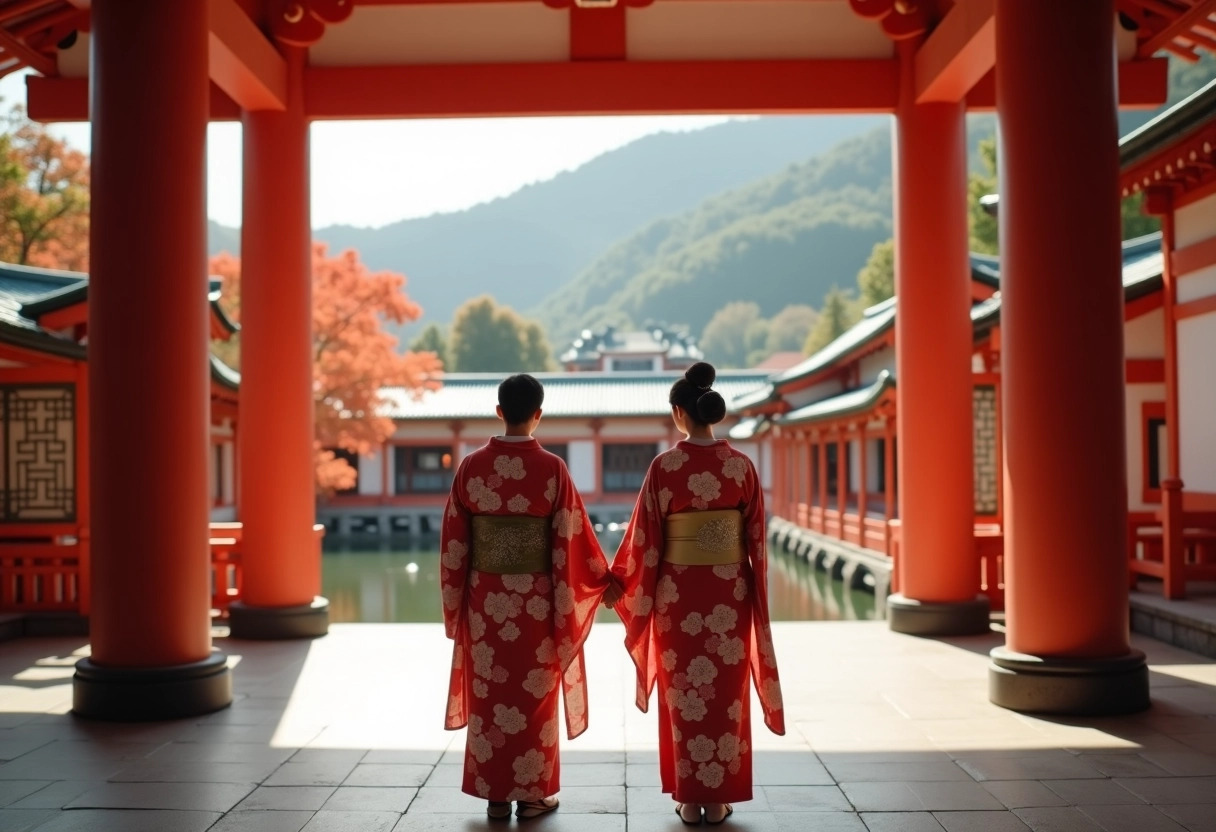
Common symbols and rituals in traditional weddings
Wedding traditions, although unusual, are often rich in symbols and rituals. Take the case of the United Kingdom, where brides follow the tradition of wearing ‘something old, something new, something borrowed, something blue’. This 19th-century custom is said to bring luck to the couple, with each element representing a specific blessing for them.
In Germany, the future spouses break dishes before the wedding to ward off evil spirits. This symbolic gesture is not only an exorcism but also a way to strengthen the bonds between the families and friends participating in this collective ritual.
Universal symbols and local interpretations
- Greece: hiding a piece of sugar in the bride’s glove for a peaceful married life.
- Morocco: wearing seven different outfits to represent the seven days of celebration.
- Netherlands: keeping the cork from the first bottle of champagne to ensure fertility.
In Brazil, throwing stuffed animals or effigies of Saint Anthony of Padua is practiced to ensure a happy future marriage. This tradition, just like in Argentina where objects are embedded in the cake to predict marriages in the year, shows how different cultures invest symbols of the same ceremony with varied meanings.
The diversity of wedding rituals around the world, ranging from the most austere to the most festive, illustrates the richness and plurality of human traditions. Consider each custom as an open window into the culture and beliefs of a people.