
A debit transfer appears on your account statement at La Banque Postale, and you cannot associate it with a purchase, subscription, or order you have given. This type of transaction, sometimes labeled cryptically, generates legitimate concern. Before concluding that fraud has occurred, it is essential to understand what a unidentified debit transfer technically entails and what steps to take to obtain a quick response from the bank.
Bank Label and Identification of the Suspicious Transaction
The first difficulty lies in the label displayed on the statement. An outgoing SEPA transfer usually bears the name of the beneficiary, but this name may be truncated, abbreviated, or replaced by an internal reference. A recurring direct debit where the creditor has changed its business name produces the same effect: the debited amount seems unknown while it corresponds to an active contract.
Before contesting, check the detailed history of the transaction in your client area. The available information (beneficiary’s IBAN, submission date of the order, unique reference) often helps trace the origin of the movement. When you encounter an unidentified debit transfer at La Banque Postale, this verification reflex prevents you from initiating a dispute for a transaction you actually authorized.
If doubt persists after this verification, note the date, exact amount, and reference of the transaction. These elements will be required at every stage of the complaint.

Legal Deadline for Contesting an Unauthorized Transfer
The legal framework applicable to unauthorized transfers differs from that of card payments. Articles L.133-18 and L.133-24 of the Monetary and Financial Code set the framework. The client has a period of up to thirteen months after the debit date to report a transaction they did not authorize.
This maximum period does not exempt the need to act quickly. A late dispute complicates the return of funds because the recipient account may be emptied or closed in the meantime. The bank, for its part, will have more difficulty tracing the transaction’s path if several weeks have passed.
Bank’s Obligation to Refund
When the transaction is indeed unauthorized, the bank must refund the debited amount without undue delay. The only exception concerns cases where the institution proves client fraud or gross negligence on their part (for example, voluntarily sharing their credentials with a third party). This burden of proof lies with the bank, not the client.
A transfer executed after manipulation (fake bank advisor, fake RIB sent by a scammer) is not automatically considered “authorized.” The analysis then focuses on the authentication used, alerts received by the client, and the circumstances of the deception.
Disputing with La Banque Postale: Concrete Steps
La Banque Postale distinguishes two dispute channels depending on the payment method involved. For a transfer, the process goes through the claims service, not through the card dispute form available in the client area.
- Contact your usual bank advisor by phone or at the post office to report the suspicious transaction and obtain an initial block or enhanced monitoring of the account.
- Send a written complaint to the customer service, attaching the account statement, transaction reference, and a description of the facts. Sending by registered mail with acknowledgment of receipt formalizes the date of the dispute.
- If the response is unsatisfactory or absent after the announced processing time, contact the mediator of La Banque Postale, whose contact details are available on the institution’s website and on your statements.
Also, remember to immediately change your login credentials to the client area if you suspect your access has been compromised. A fraudulent transfer executed from your online interface implies that someone has obtained your codes or validated the transaction via your strong authentication device.
Fraudulent Transfer and Filing a Complaint
When the transaction involves proven fraud (identity theft, fake RIB, manipulation by a third party), filing a complaint with the police or gendarmerie constitutes a separate step from the bank dispute. Both processes are complementary and not interchangeable.
The receipt of the complaint strengthens your case with the bank. It attests to your good faith and triggers an investigation that may lead to freezing the funds in the recipient account if it is still being funded.
Reporting on the Dedicated Platform
The site Cybermalveillance.gouv.fr offers an online diagnostic pathway to qualify the type of fraud suffered and guide towards the appropriate steps. This reporting does not replace the complaint but feeds a database that helps authorities identify recurring scam networks.
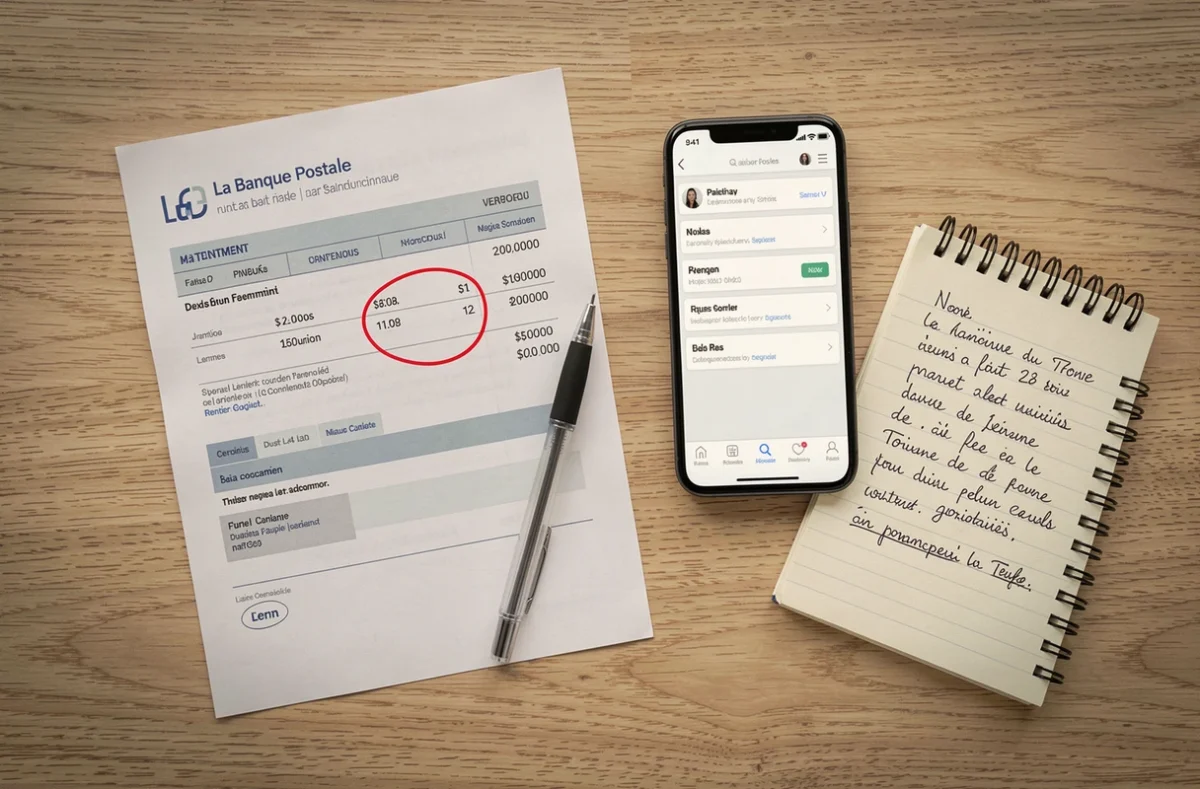
Beneficiary Verification: A Preventive Measure to Know
La Banque Postale has deployed a beneficiary verification service when registering a new transfer recipient. This check compares the name entered by the client with the one associated with the IBAN in the recipient bank. The result may indicate a total, partial, or no match.
This mechanism reduces the risk of transferring to a spoofed account, but it does not cover already recorded permanent transfer orders or SEPA direct debits. Its effectiveness also depends on the quality of the data entered by the client: a spelling mistake in the beneficiary’s name can generate a non-match alert without any fraud occurring.
In the face of an unidentified debit, the most protective reaction remains the combination of immediate verification in the client area, a quick report to the advisor, and, if the transaction is not recognized, a formal written dispute. The legal framework protects the account holder, provided they act promptly.