
Professional tools do not guarantee the success of a home project. Recycled materials, often overlooked, sometimes yield better results than new products. Some unlikely assemblies withstand the test of time when traditional techniques fail.
Recovered pallets transform an outdoor space at a lower cost. Amateur mistakes sometimes lead to ingenious solutions, now adopted by experts. Advice from direct experience holds surprises, far from the conventional methods promoted by major retailers.
Why DIY gardening is becoming increasingly popular
Creativity emerges from workshops, invites itself into greenery, and takes its ease where nature allows free rein. DIY gardening is no longer limited to makeshift repairs or utilitarian constructions: everyone personalizes their outdoor space, shapes their environment, and reinvents their weekends. A pallet table takes shape, a raised vegetable bed appears between two flower beds, a children’s play area is born from recovered materials, each creation carries a story, an intention, a simple pleasure.
This taste for doing it oneself is rooted in the desire to give a second life to objects. Involving family, inviting friends to build together, teaching children the value of the gesture and the time spent outdoors: the garden becomes a space for sharing, a place where generations meet around tools and ideas.
In the process, one gains in well-being. Working the soil, screwing, assembling, repurposing an everyday object: each action pulls a little further away from screens and brings one back to the tangible. Online communities of enthusiasts are full of tips and advice: on brico-deco-jardin.net, for example, you can find everything to satisfy all DIY home and garden desires.
Season after season, the garden transforms into a living laboratory. Upcycling, composting, creating a rainwater collector or an insect hotel: all ideas that combine creativity, conviviality, and respect for biodiversity. With every step, the DIYer engages in an ecological responsibility approach that gives meaning to the effort.
What easy ideas to transform your outdoor space without breaking the bank?
Focusing on material recovery paves the way for a creative and accessible transformation of the garden. Driftwood, pallets, slates, empty bottles: everything becomes an excuse for inventiveness without straining the wallet.
Here are some concrete ideas that change the game:
- Place a wooden pallet on bricks, and it’s transformed into a garden coffee table or a bench. A few colorful cushions are enough to create a spontaneous relaxation corner.
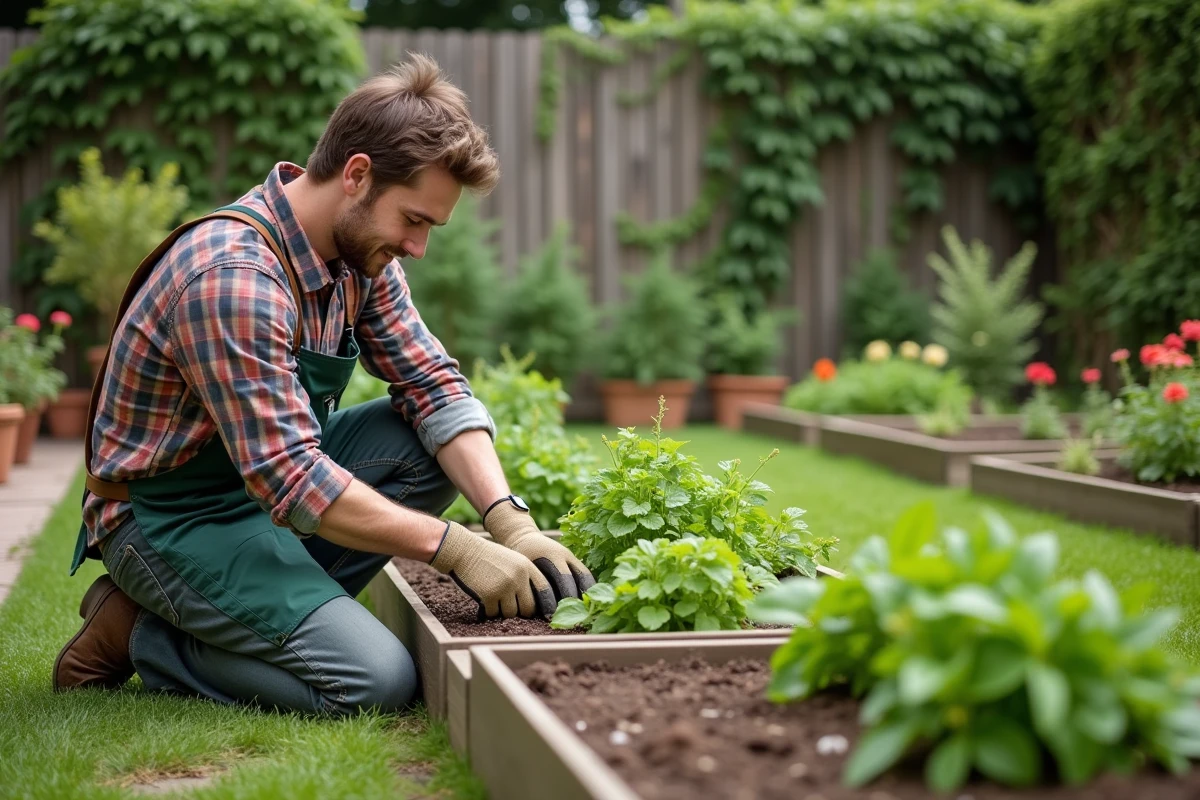
- Assembling a raised vegetable bed from recovered planks optimizes space and invites the cultivation of herbs and vegetables even in a small area.
- Install a pallet vertically, add horticultural felt, a bit of soil, and climbing plants: the vertical garden takes shape, and greenery gains height.
- Build a composter from recycled wood to turn kitchen waste into fertile soil, or install a rainwater collector to water without wasting.
For ambiance, nothing is simpler: string lights and lanterns emit a soft light as night falls. Slate labels personalize the vegetable garden, while a few DIY accessories give the garden a true outdoor living room spirit. Protecting furniture with sofa or chair covers, redoing walls and balconies with adhesive paper or a wall panel: every detail counts.
Creating shaded areas with a pergola, a gazebo, or simple drapes offers long evenings outdoors. Mixing wood, stone, bamboo in material choices ensures lasting harmony, for a garden that is both welcoming and environmentally friendly.
Practical tips and inspiration to start your DIY projects in the garden
Transform your garden into a laboratory of experiments with simple and ingenious gestures. Installing a bird feeder attracts local wildlife and promotes biodiversity. A piece of wood, a few branches, a string: that’s enough to provide shelter for chickadees or robins. On the same principle, the insect hotel is an assembly of hollow stems, pine cones, and bark that welcomes ladybugs, solitary bees, and other helpers of the vegetable garden. These DIY shelters, easy to make, stimulate pollination and protect crops.
Consider composting to reduce your green waste while nourishing the soil. A simple recycled wooden bin allows you to deposit peels and clippings: decomposition produces fertile humus, valuable for planting. Rainwater recovery via a barrel or tank, installed at the end of a downspout, provides ecological watering, even during dry spells.
To go further, a few initiatives make a difference:
- Build a raised vegetable bed to optimize space and vary crops: herbs, vegetables, edible flowers.
- Multiply vertical supports for your climbing plants or strawberries, using pallets or wire mesh.
- Label your seedlings with homemade labels made of slate or wood, to combine aesthetics and practicality.
The garden continues to reinvent itself with each of your trials. With every season, a new challenge, an unexpected success, and always the satisfaction of seeing your green space evolve thanks to your own hands. It’s impossible to predict what your next DIY project will bring: a surprise, a meeting, or simply the pleasure of having dared to try something new.