
The flexibility of a layout influences the feeling of conviviality more than the choice of a decorative style. Transforming a house into a unique space requires working on often underestimated levers: securing furniture, integrating living materials, and the modularity of living spaces. Here, we detail the areas that generate a real impact on daily comfort.
Securing high furniture and preventing tipping
A piece of furniture not secured to the wall poses a concrete risk, not just a theoretical precaution. The French Insurance Federation, in its 2023 report on domestic accidents, notes that the increase in unsecured high furniture is correlated with a rise in tipping accidents, particularly in households with children.
Open shelves, modular bookcases, and freestanding wardrobes: these pieces are appealing for their visual lightness, but their high center of gravity makes them unstable as soon as a top drawer is opened or a child hangs on them. We recommend systematic wall anchoring with metal brackets or anti-tipping straps, even for low furniture placed on an uneven floor.
This point directly alters layout choices. A secured piece of furniture requires defining its location before considering circulation in the room, which necessitates planning the arrangement in advance rather than moving elements according to whims. For those looking to learn more about Incroyable Maison, this structured approach to layout is a good starting point.
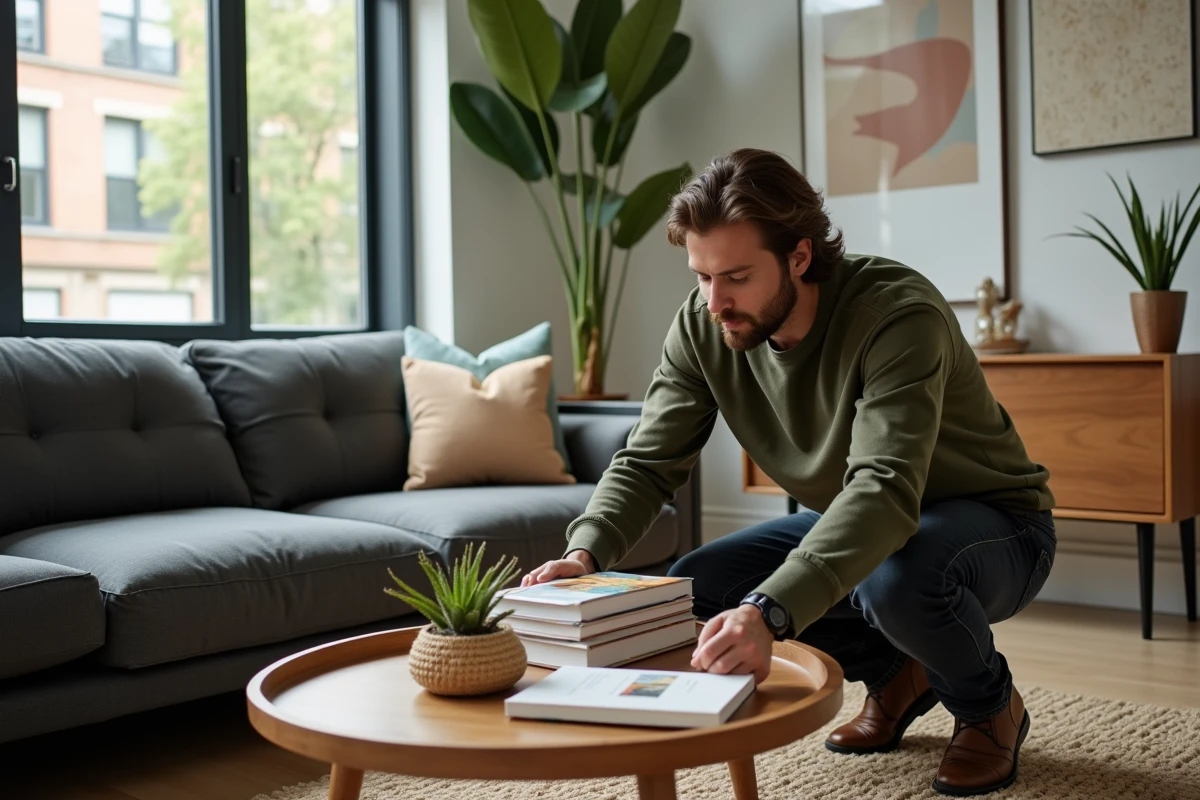
Biophilic design applied indoors: beyond green plants
Placing a ficus in a corner does not constitute biophilic design. The systematic review published in Frontiers in Psychology (Cameron et al., 2022) shows that bioaffiliation elements reduce perceived stress and improve mood, even in small urban spaces, provided multiple sensory registers are combined.
Three categories of levers produce measurable effects:
- Visible raw materials (unvarnished wood, stone, terracotta) activate a sensory familiarity that lacquered or melamine surfaces do not trigger.
- Views of the outside, even partial, alter the perception of a room’s size. A mirror placed opposite a window visually doubles the depth of the natural field.
- Volume vegetation (narrow green walls, variable-height suspensions, planters integrated into furniture) goes beyond a simple pot placed on a shelf by creating continuity between indoors and outdoors.
A common mistake is to treat vegetation as an interchangeable decorative accessory. A biophilic interior works when natural materials, light, and greenery form a coherent system, not an accumulation.
Modularity of living spaces: configure rather than decorate
The conviviality of a home depends more on the ability to reconfigure a space than on the quality of its decoration. A room fixed in a single use (TV lounge, formal dining room) quickly becomes unsuitable for the actual uses of a household.
Modular furniture transforms a single room into several functional spaces depending on the time of day. An extendable table that shifts from a desk to a dining table, a bench with integrated storage, a sliding textile partition: these devices allow for switching from one use to another without moving furniture.
Zoning through light and textiles
Defining areas without rigid partitions involves two underutilized tools. The first is directional lighting: a low pendant above a table creates an intimate zone, while indirect LED strip lighting marks a circulation space. The second is the rug, which physically defines a usage perimeter.
We observe that light zoning advantageously replaces physical separations in rooms of less than twenty square meters. It preserves circulation fluidity while giving each activity its visual territory.
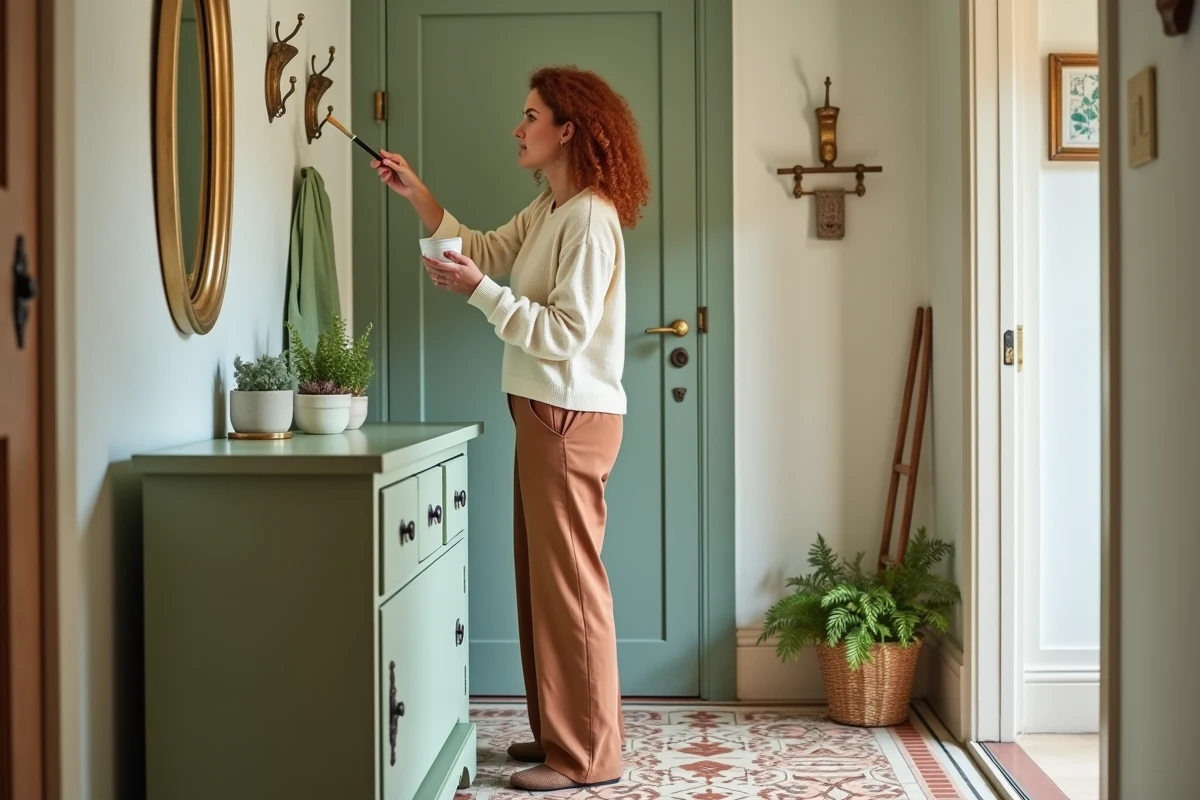
Integrated storage and structural decluttering
Adding storage furniture to an already cluttered room exacerbates the problem. The effective logic is to integrate storage into existing elements: stair steps as drawers, headboards with niches, entry benches with storage.
This approach frees up floor space, which alters the perception of volume much more than any wall color choice. A clear hallway appears wider. A living room without an apparent sideboard seems brighter.
Balancing visible and closed storage
Open storage (shelves, niches, rails) only works with visually homogeneous objects: books, ceramics, identical boxes. As soon as the contents become heterogeneous, closed storage protects the visual coherence of the room.
- Kitchen and bathroom: favor solid facades. Everyday products generate constant visual noise.
- Bedroom and office: combine open niches (a few chosen objects) and closed boxes for the rest.
- Living room and entry: a single open shelf with selected objects is better than three display cabinets filled to capacity.
Structural decluttering is not just about sorting your belongings. It involves designing the architecture of storage before purchasing any furniture, starting from the available volume and the items to be stored, not from the aesthetics of a catalog.
Transforming a house into a convivial space relies on technical decisions made in advance: securing furniture, integrating natural materials as a system rather than as an accessory, planning modularity from the design stage. Decoration comes afterward, to dress a structure already designed for comfort and safety.