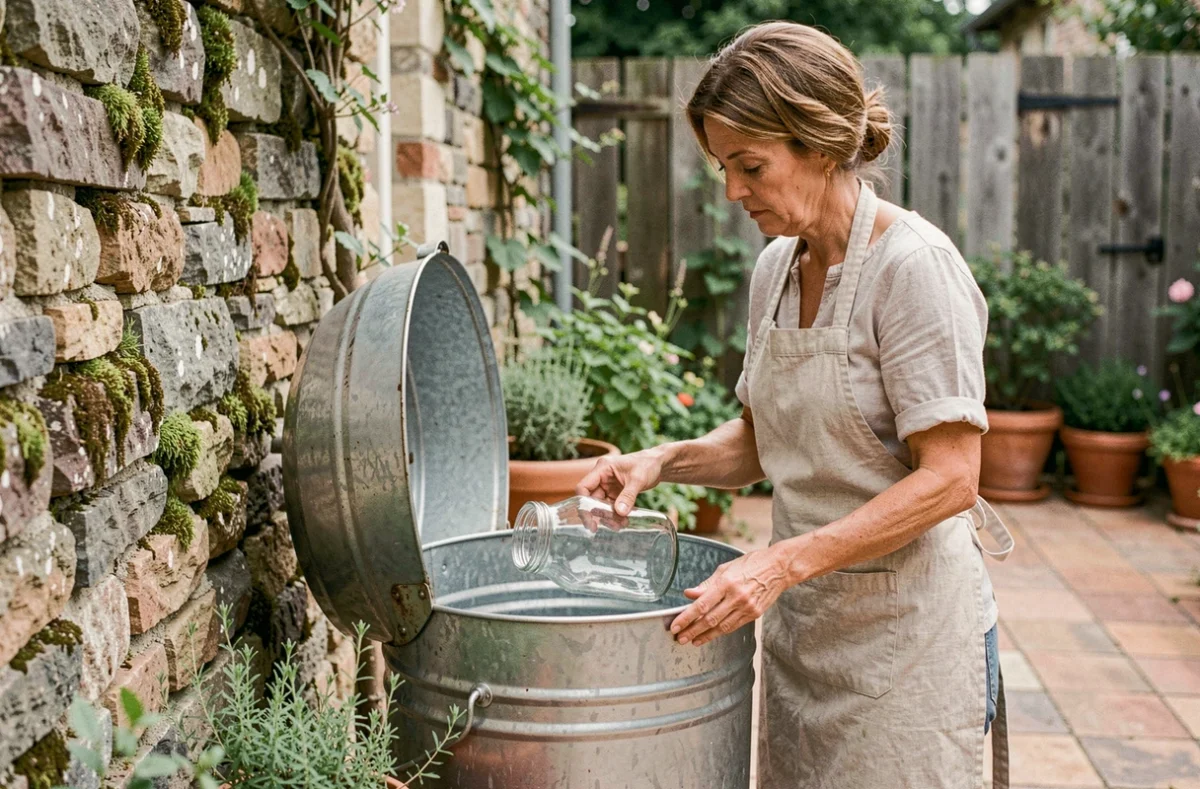
Rainwater collected in a domestic tank does not have an expiration date printed on the label. The duration for which this liquid remains usable depends on measurable parameters: storage temperature, light exposure, container quality, and upstream filtration level. Understanding these variables allows for setting concrete benchmarks for each use, from gardening to sanitation.
Bacterial Contamination of Stored Rainwater: How Timelines Change
Freshly collected rainwater after a prolonged downpour contains few microorganisms. The problem begins with the time spent in the tank.
| Storage Duration | Microbiological Risk | Still Usable For |
|---|---|---|
| Less than 24 hours | Low if the container is clean and closed | Watering, outdoor cleaning, toilet flushing |
| 24 to 48 hours | Moderate, possible beginning of bacterial proliferation | Watering, floor washing, toilets |
| Beyond 48 hours without treatment | High, bacteria development even in a closed container | Watering only, after visual and olfactory inspection |
| Several weeks with filtration and treatment | Controlled if the treatment chain is maintained | Laundry, floors, toilets, decorative fountains (according to regulations) |
Beyond 48 hours without treatment, rainwater develops bacteria, even in a certified food-grade collector. Ambient temperature and organic residues (leaves, dust, pollen) accelerate this degradation. A liquid stored in full sunlight in a clear tank can spoil much faster than water kept in an opaque buried reservoir.
To delve deeper into the parameters that influence this shelf life, the useful resources on Casinca detail the interactions between tank type, climate, and the quality of the collected liquid.
July 2024 Decree: The New Regulatory Framework for Rainwater in France
Since September 1, 2024, the old decree of August 21, 2008, which regulated the domestic use of rainwater, has been replaced. The decree no. 2024-796 of July 12, 2024 and the order of July 12, 2024, create a specific legal category: water unfit for human consumption (EICH).
Rainwater falls into this category. The texts now regulate the entire chain, from collection to storage, treatment, and distribution for defined domestic uses.
Permitted and Prohibited Uses According to Regulations
The uses explicitly covered by this new framework include laundry washing, floor cleaning, toilet supply, watering, and decorative fountains. However, direct consumption as drinking water remains prohibited without approved treatment that meets health requirements.
This regime is experimental for certain types of EICH (gray water, pool water, treated wastewater) until December 31, 2034. The regulations may therefore evolve based on health and technical feedback collected during this period.
Filtration and Treatment of Rainwater: Devices That Extend Shelf Life
Without filtration, even a buried opaque tank that is well sealed does not guarantee quality water beyond a few days. Three levels of treatment allow for extending shelf life and broadening uses.
- Mechanical pre-filtration (grate, leaf filter, frog filter) intercepts coarse debris before entering the tank. It does not treat bacteria but slows degradation by limiting available organic matter.
- Fine filtration (sediment filters, activated carbon filters) reduces suspended particles and some chemical pollutants. An activated carbon filter mitigates odors and improves the organoleptic quality of the liquid.
- Treatment with chlorine tablets or UV directly targets microorganisms. Chlorine tablets dosed for a specific volume of liters allow for spot chemical treatment. UV disinfection, which is more expensive to install, does not add any chemical residues to the water.
Each link in this chain matters. A clogged filter or an approximate chlorine dosage renders treatment ineffective. Regular maintenance of filters and cleaning of the tank directly condition the duration for which the water remains usable.
Opaque Tank, Low Temperature, and Absence of Light
Storage conditions weigh as heavily as the treatment itself. An opaque tank prevents algae photosynthesis. A low temperature (buried tank or placed in the shade) slows bacterial multiplication. Conversely, a rainwater collector exposed to sunlight on a terrace accumulates rapid degradation factors.
Storage in a closed, opaque tank maintained at a cool temperature can keep pre-filtered water in acceptable condition for watering for several weeks. For indoor uses like washing machines or toilets, additional treatment with fine filtration remains necessary, even with suitable storage conditions.
Tank Maintenance and Emptying Frequency: A Often Overlooked Parameter
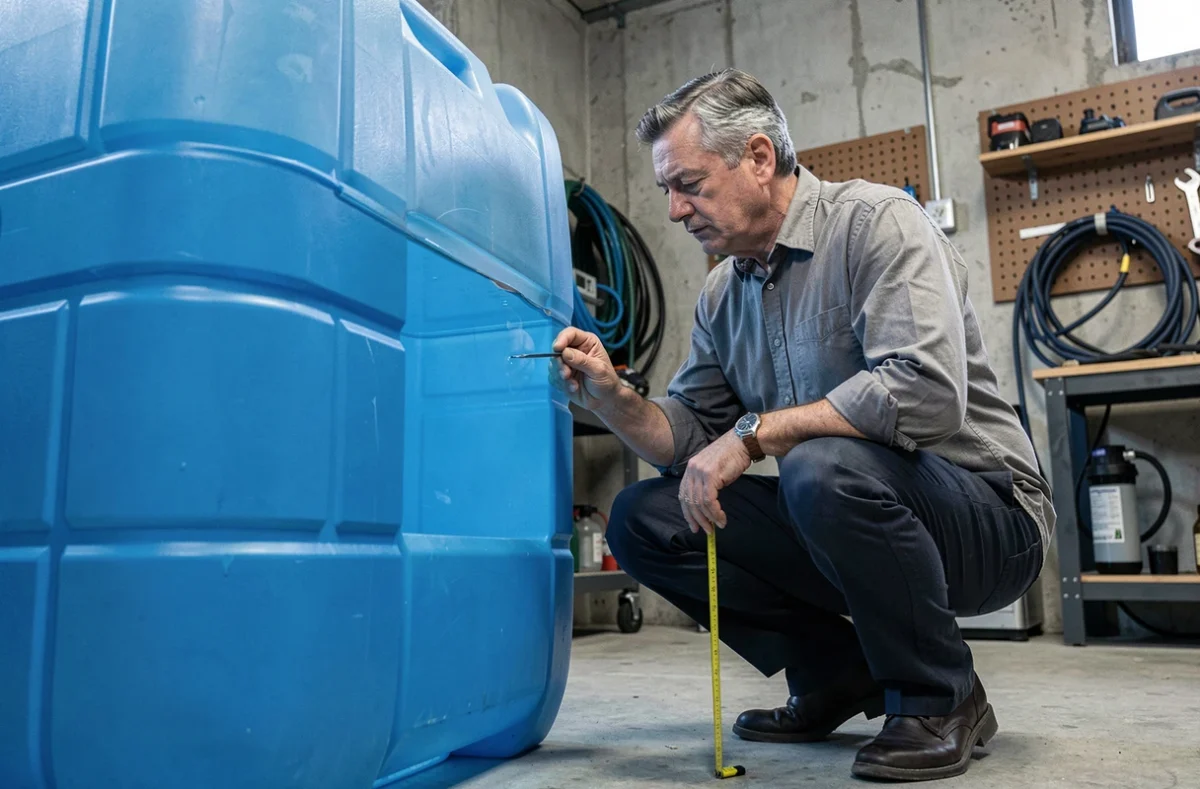
The quality of stored water also depends on the condition of the container. Sediments accumulate at the bottom of the tank over time, creating an environment conducive to bacterial growth. Complete emptying and cleaning of the tank at least once a year are recommended.
The gutters and the upstream collection network deserve the same attention. Decomposing leaves in a gutter introduce organic matter with each downpour, reducing the quality of the liquid as soon as it enters the collector.
- Inspect the gutters and the tank’s entry filter at each change of season
- Check for cracks or failing seals on the tank that could allow insects or light to enter
- Replace activated carbon filters and filtration cartridges according to the intervals recommended by the manufacturer
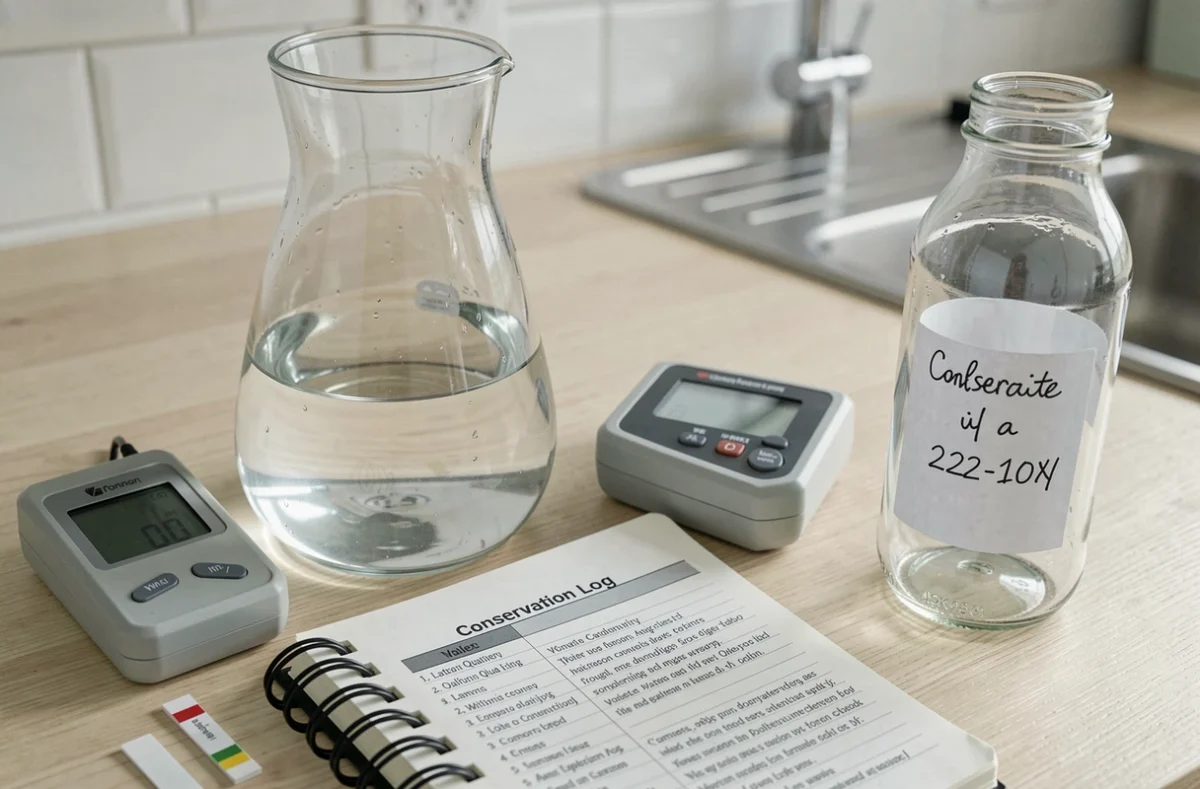
- Visually and olfactorily check the water before each non-outdoor use
The shelf life of rainwater in a domestic tank is not a fixed number. It results from the interaction between the quality of collection, the type of treatment, and the rigor of maintenance. A well-sized and regularly maintained system allows for storing water for several weeks for non-potable uses. Without this care, the safety period falls below 48 hours.