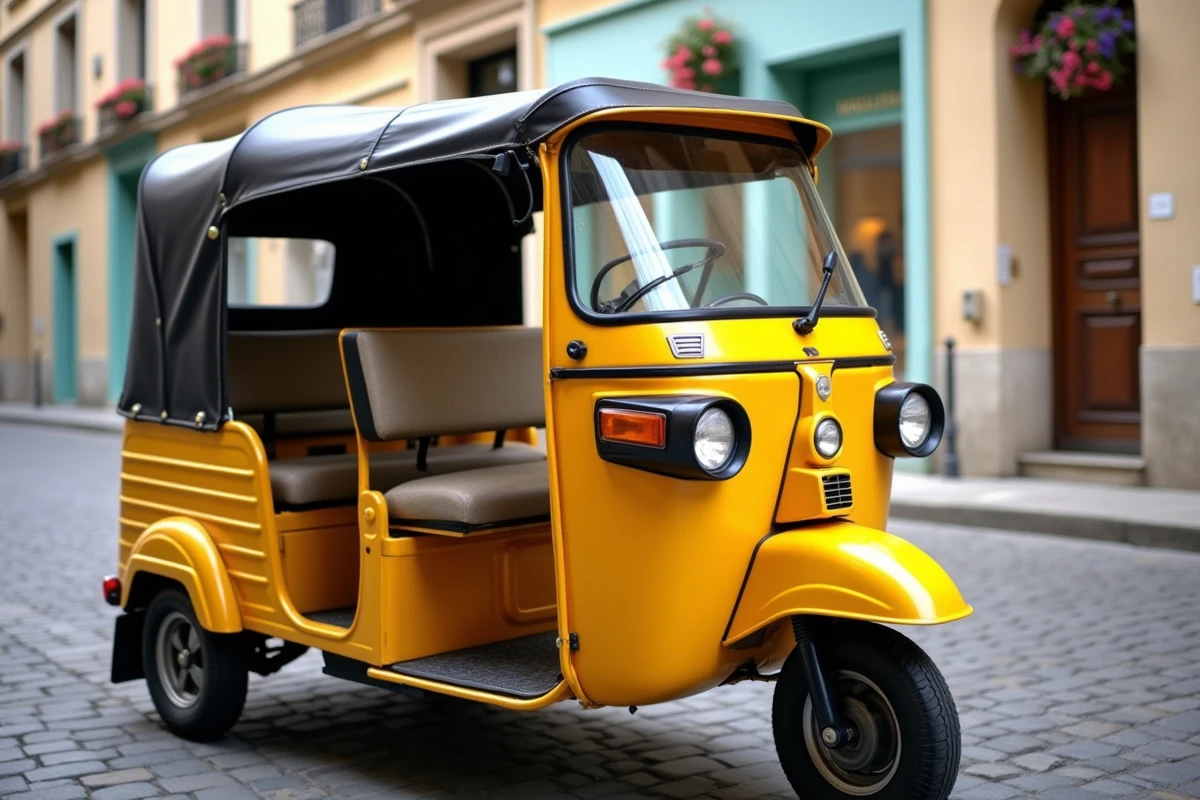
The tuk tuk has been part of the urban landscape in several major Asian cities for decades. In France, this motorized tricycle is starting to appear on the streets, driven by tourist uses and reflections on urban mobility. However, its regulatory situation remains unique, straddling several categories of vehicles.
Electric tuk tuk and sustainable mobility package: an overlooked lever
Did you know that some employers reimburse part of the home-to-work trips made by electric tuk tuk? Since the extension of the sustainable mobility package to local authorities (decrees from 2020, supplemented in 2022 and 2023), some public and private employers consider the registered electric tuk tuk as an electric-assisted bicycle taxi.
In practical terms, this means that an employee using this mode of transport can benefit from partial reimbursement, just like an electric bike user. For urban operators, it is an economic argument that changes the commercial game. A regular professional client represents a more stable income than a passing tourist.
This practice remains uncommon, but it is included in some employer charters. Before launching an activity, it is relevant to check whether the concerned local authority includes this system, as it can impact the project’s viability. For everything you need to know about tuk tuks in France, the question of the business model deserves to be asked before that of the license.
Vehicle category and required license for a tuk tuk in France
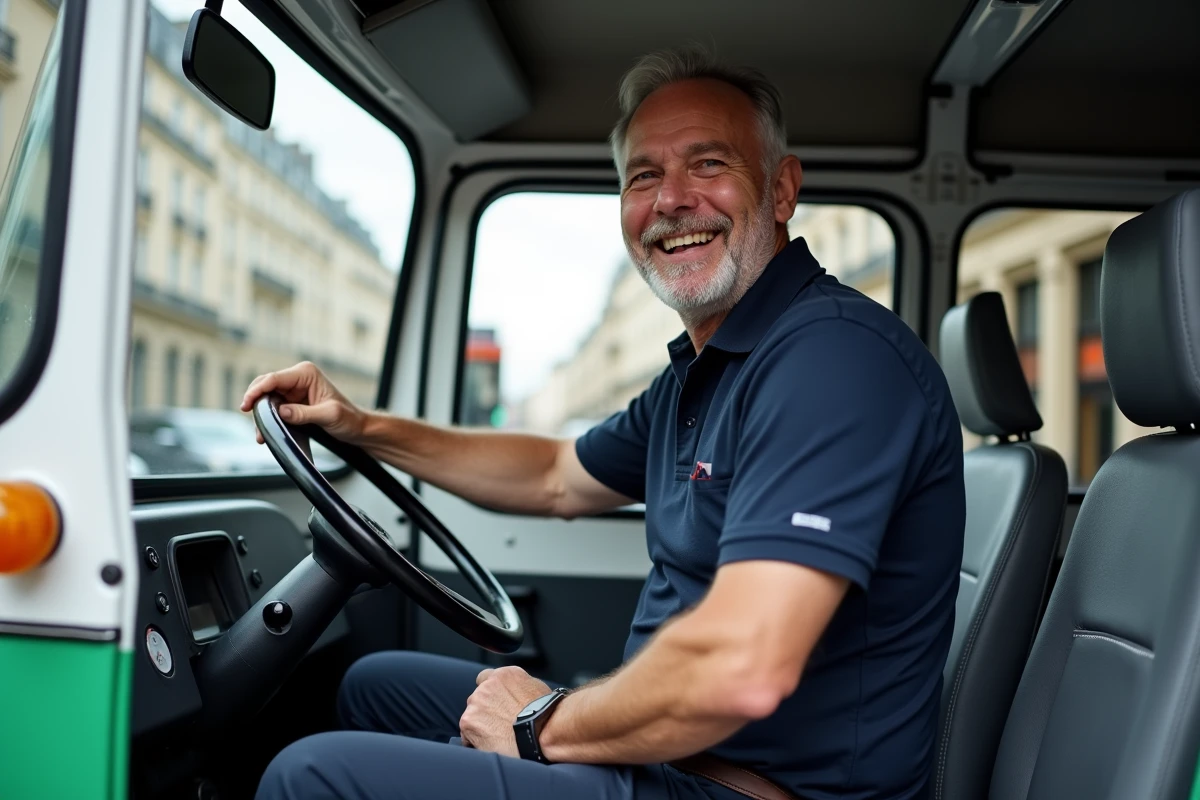
The tuk tuk does not have its own category in the French road code. Its classification depends on its motorization, weight, and maximum speed. A thermal or electric tuk tuk approved for the road generally falls into category L5e (motor tricycle).
Why does this distinction matter? Because it determines the required license. A tricycle classified as L5e requires at least a B license. Models limited to a lower speed may sometimes fall under a lighter category, but these cases are rare in the French market.
Approval: the main sticking point
An unapproved tuk tuk cannot circulate on public roads. European approval (community reception) ensures that the vehicle meets safety, lighting, and emissions standards. Importing a tuk tuk from Asia without going through this procedure exposes it to immediate impoundment.
The simplest solution is to purchase an already approved model from a distributor established in France or Europe. Several brands offer electric tricycles designed to meet European requirements, with registration document and technical inspection included.
- Check for community reception (European conformity certificate) before any purchase
- Ensure that the vehicle has a recognized identification number (VIN) by the ANTS for registration
- Plan for periodic technical inspections, as with any registered motor vehicle
Senate bill on bicycle tourism transport
A bill submitted to the Senate in 2022 (n° 620) and taken up in committee in 2024 directly addresses the case of electric-assisted tuk tuk vehicles. The text provides for a specific status distinct from VTC and chauffeur-driven bicycles.
This status would lighten the requirements for professional capacity. A tourist tuk tuk driver would not need the VTC professional card. In return, the text strengthens obligations on two specific points: professional civil liability insurance and periodic technical inspection.
The text has not yet been adopted. Its scope remains limited for now. However, it reflects a legislative desire to clarify the regulatory ambiguity surrounding these vehicles, where each municipality applies its own rules for parking and circulation authorization.
Insurance and safety of a tuk tuk: what differs from a car
An approved tuk tuk must be insured for at least civil liability, like any motor vehicle. But for passenger transport activities, a specific professional RC insurance is mandatory.
Traditional insurers rarely offer contracts suited to motorized tricycles. It is often necessary to go through specialized brokers in atypical vehicles or tourist transport. The cost of the premium depends on the number of passengers transported (up to six on some models) and the circulation area.
Safety equipment to consider
Approved tuk tuks in Europe are equipped with seat belts for each seat. The open structure of the vehicle raises questions about protection in the event of a side impact, which remains lower than that of a closed car. The limited speed of the tuk tuk reduces this risk in urban areas, but does not eliminate it.
- Seat belts mandatory for all passengers
- Lighting compliant with European standards (front, rear lights, turn signals)
- Mirrors adapted to the width of the vehicle
- Fire extinguisher and first aid kit recommended for passenger transport
Urban mobility plans: the tuk tuk as shared transport
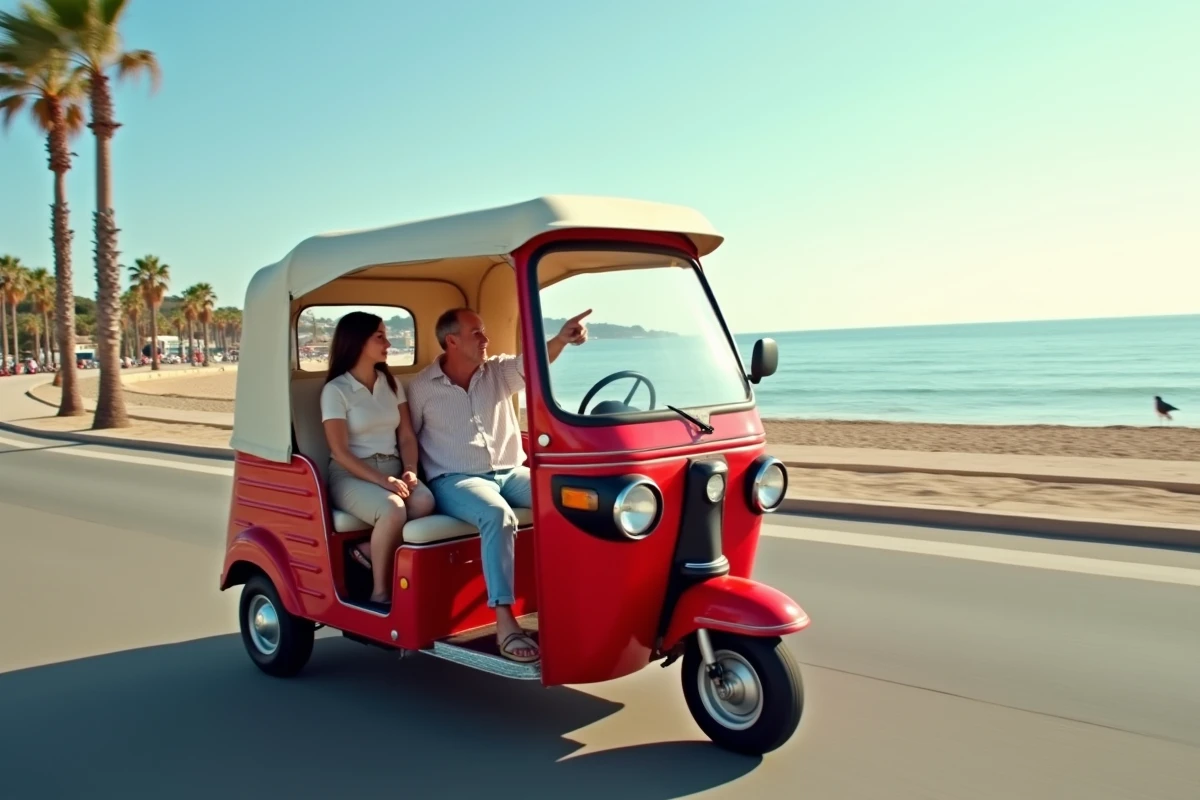
Since 2023-2024, several French municipalities are testing the integration of tuk tuks into their mobility plans. These local authorities no longer view the tricycle as a mere tourist gadget, but as a mode of shared mobility suitable for pedestrianized city centers.
Funding comes from dedicated shared mobility programs rather than tourism budgets. This change in budget category opens up prospects for operators: subsidies for purchasing electric vehicles, provision of reserved parking areas, integration into multimodal transport applications.
For a project developer, engaging in this dynamic means dialoguing with the local authority in advance, offering a regular service (not just seasonal), and demonstrating complementarity with existing public transport. The tuk tuk works best on short trips, in neighborhoods where buses rarely pass or where cars are discouraged.
The regulatory framework for tuk tuks in France is still under construction. Between the Senate bill, municipal experiments, and the extension of the sustainable mobility package, signals are converging towards a gradual recognition of this vehicle. Those considering launching should check the approval of the chosen model, obtain suitable professional insurance, and monitor the evolution of Senate bill n° 620.