Some figures do not lie: less than 50 mg/l of dry residue is the hallmark of the purest natural mineral waters, a performance that remains rare in the market. This threshold, validated by a large part of the veterinary community, makes all the difference in protecting domestic cats from the formation of urinary stones, a problem far from marginal for our most demanding companions in terms of hydration.
In France, Mont Roucous water for cats is among the few very low mineral waters frequently mentioned in dietary protocols for fragile animals. Its transparent composition, virtually free of nitrates and low in sodium, allows it to stand out in the bottled water landscape.
Understanding Cats’ Water Needs to Preserve Their Health Daily
The water balance of a cat is not obvious. Its body, ultra-sensitive to excess minerals, requires constant vigilance. Everything hinges on water consumption, closely linked to feline health: when daily intake is insufficient, the risk of urinary stones or kidney failure skyrockets. To put it in perspective: an adult cat typically absorbs between 40 and 60 ml of water per kilogram each day, but this amount largely depends on the type of food (kibble or wet food), the household climate, and even the temperament of the animal.
Thinking about quality does not just mean checking clarity. It is mainly about analyzing sodium, calcium, and magnesium levels: excessively high levels can stimulate urinary disorders or even accelerate existing kidney failure. Veterinarians therefore clearly recommend opting for low mineral water to protect cats with delicate health.
Here, Mont Roucous stands out. Low in dry residue and free from contaminants, its formula meets the specific needs of cats, which justifies its popularity among many professionals. Choosing the water you pour into the bowl is not just a detail: it is about anticipating urinary complications and investing in your pet’s long-term vitality.
Which Water to Choose for Your Pet? Comparison of Available Options
Practical and ubiquitous, tap water does not, however, have unanimous support for our companions. Depending on the region, limestone, chlorine, or traces of nitrates sometimes prompt a rethink of the solution and consideration of a filtration system or even an alternative supply method. Even when governed by strict standards, the mineral content remains variable: some areas display concentrations of calcium and magnesium that are not suitable for all animals.
For those exploring alternatives, bottled waters offer various options: some are mineral, others are spring water, or even very low in minerals. You cannot go wrong by checking the label for the mention “dry residue at 180°C”: a figure below 100 mg/L certifies low mineral water, ideally designed to avoid urinary issues for cats.
| Type of Water | Mineral Content | Compatibility Cats/Dogs |
|---|---|---|
| Tap | Variable | Depends on the region and treatment |
| Bottled Mineral Water | Low to high | Read the label carefully |
| Low Mineral Water | Less than 100 mg/L | High tolerance, recommended for cats |
The real nuance is low mineralization. A sensitive cat will always benefit from water that is very low in calcium, magnesium, and sodium. Often, just a few milligrams are enough to alter the urinary comfort of a feline with fragile health.
Why Mont Roucous Water is a Preferred Choice for Your Cat’s Well-Being
Harvested in the heart of the Haut-Languedoc regional natural park, Mont Roucous relies on low mineralization to support cat health. This water, almost devoid of calcium and magnesium, gives the animal the best chance to keep urinary stones at bay, a too frequent scourge among felines. Its dry residue at 180°C is among the lowest, ensuring a soft water that respects the often fragile kidneys of cats.
Mont Roucous does not stop there: its neutral pH appeals to veterinarians who remind us that stable water, neither too acidic nor too basic, helps the kidneys and prevents urinary mishaps. This neutrality better protects cats prone to kidney problems or lithiasis.
To better understand what makes the difference, observe the mineral contents:
- Calcium: about 3 mg/L
- Magnesium: less than 1 mg/L
- Sodium: barely 3 mg/L
The various available formats facilitate the organization of daily consumption, for both cats and dogs. The demand for control and consistency in quality remains the same, wherever you are. Offering Mont Roucous to your cat means providing a natural mineral water, unaltered, tailored to the specific needs of the feline species.
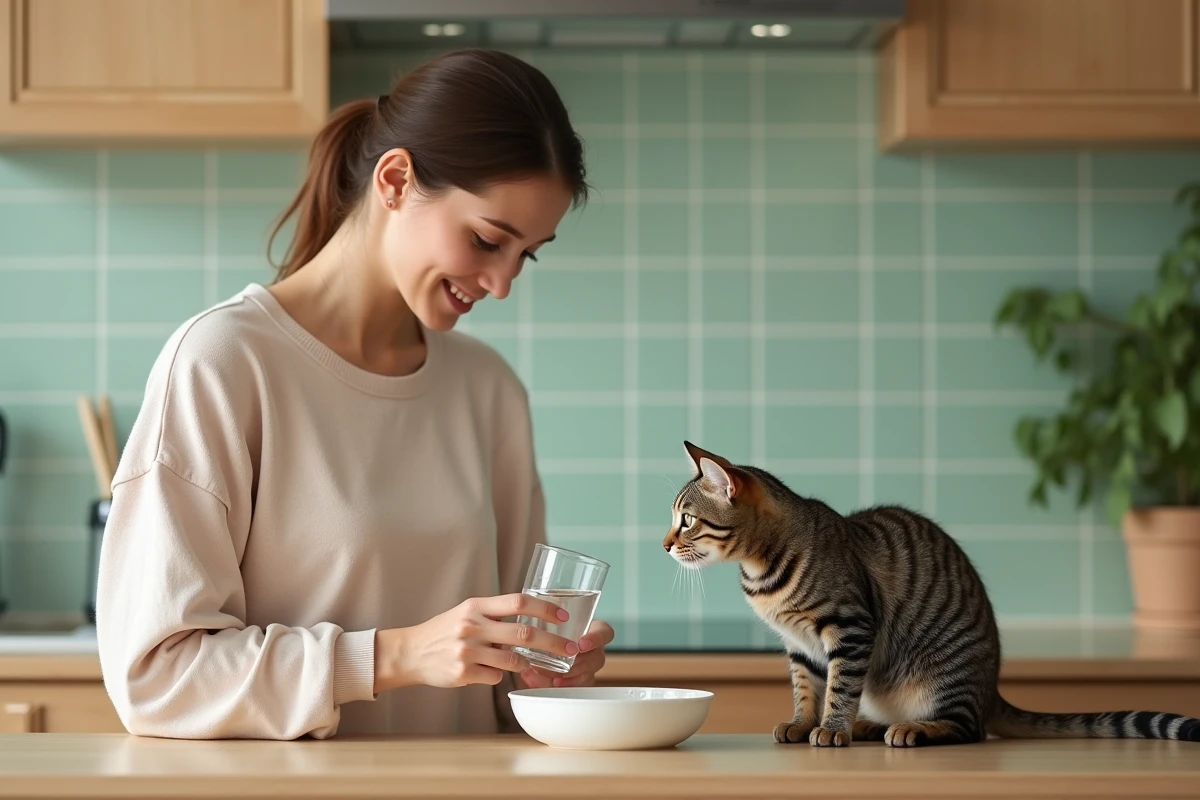
Filling a cat’s bowl with Mont Roucous sends a signal of trust and chooses the simplicity of a peaceful daily life, far from recurring health issues.