Retirement is not played out on a single health-leisure-finance table. It is about the ability to reconfigure three pillars simultaneously: living environment, time structure, and economic security. Neglecting one of the three is enough to degrade the other two within a few years. We observe that retirees who navigate this transition smoothly are those who have made early decisions about their housing, daily rhythm, and exposure to financial risk.
Inclusive housing and autonomy: the underestimated lever of retirement
The choice of housing directly influences sociability, physical activity, and cognitive development after the end of a career. The longitudinal survey Hilauseniors, conducted by the Retirement Insurance, establishes a measurable link between residential environment and the maintenance of abilities over the years.
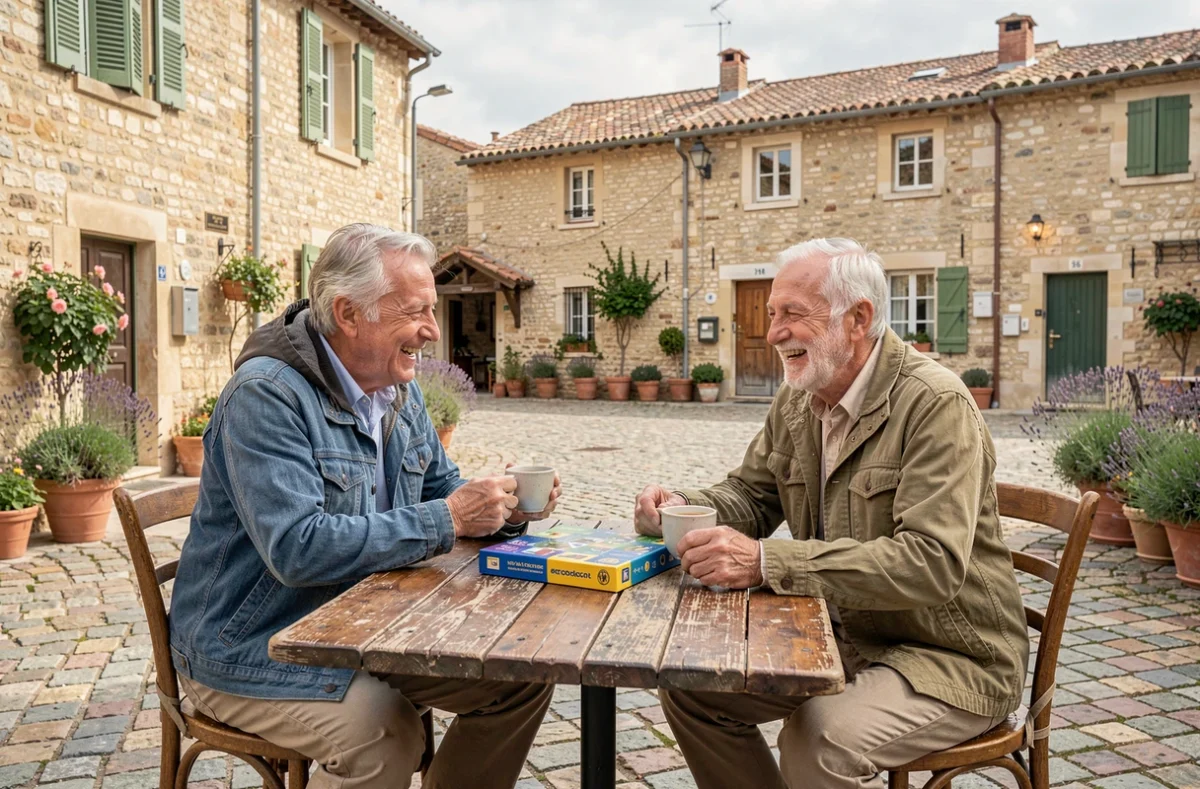
Between traditional homes and nursing homes, inclusive housing represents a little-known third option. As of January 1, 2025, more than 1,000 inclusive housing units existed in France. These structures share common spaces while preserving private accommodation, maintaining daily social connections without loss of independence.
We recommend evaluating this option well before the loss of autonomy manifests. An early move, made under good physical conditions, allows for choosing a suitable environment rather than facing an urgent relocation. To explore the various housing and service options for seniors, a useful resource is: https://www.seniorium.fr/ which lists residential solutions by region.
The issue is not just comfort. Poorly located housing (far from shops, transport, or medical offices) accelerates social withdrawal. The accessibility of the neighborhood is as important as the accessibility of the housing itself.
Financial security in retirement: what recent surveys reveal
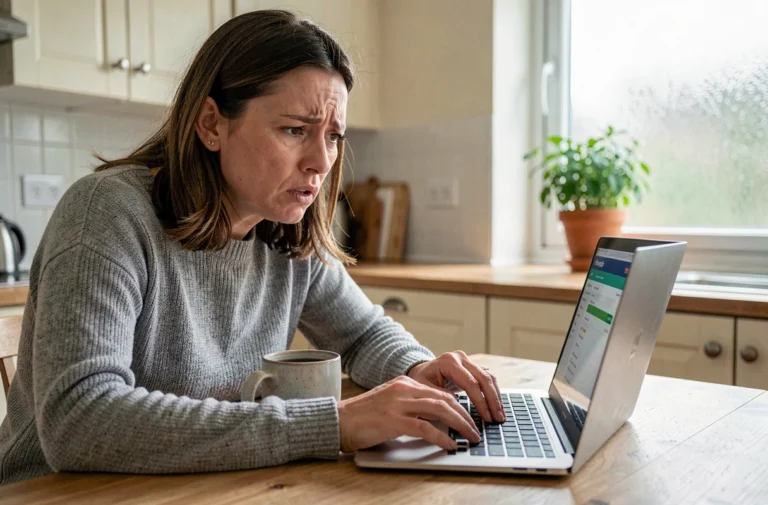
General guides present budget management as a simple matter of planning. Recent data paints a harsher picture. According to the barometer reported by Previssima, a majority of surveyed retirees state they are living financially worse than before their retirement. Workers aged 45 and older also express a marked fear of lacking resources.
France’s decline in international comparisons
The 2026 edition of the Global Retirement Index ranks France 29th out of 44 countries despite good health outcomes. This discrepancy is explained by the combination of a high tax burden and persistent regulatory uncertainty.
For a retiree, this means three concrete things:
- Not calibrating their budget based on the current pension amount without integrating a margin for downward revision.
- Checking each year the impact of new measures on their tax situation, as adjustments are often made by decree without much media visibility.
- Diversifying income sources (rental income, savings, part-time work) rather than relying on a single pension flow.
Structuring daily rhythm without replicating the professional pattern
The loss of temporal structure remains the most underestimated destabilizing factor during the transition to retirement. Throughout a career, the rhythm is imposed externally: schedules, travel, meetings. In retirement, the absence of external constraints becomes a constraint in itself if nothing replaces it.
We observe that retirees who maintain a body-mind balance are those who have established fixed appointments in their week, not out of discipline, but out of social commitment. A group physical activity class, a community workshop, regular volunteering creates a weekly framework that structures daily life without rigidifying it.
Physical activity and cognitive stimulation: the inseparable pair
Separating physical health from mental stimulation is a frequent methodological error. Research around the ICOPE program, promoted by the Retirement Insurance, jointly assesses physical, moral, and intellectual abilities. An effective prevention program addresses all three dimensions in parallel, not sequentially.
In practice, this means prioritizing activities that simultaneously engage the body and cognition:
- Dance (coordination, memory of sequences, social interaction).
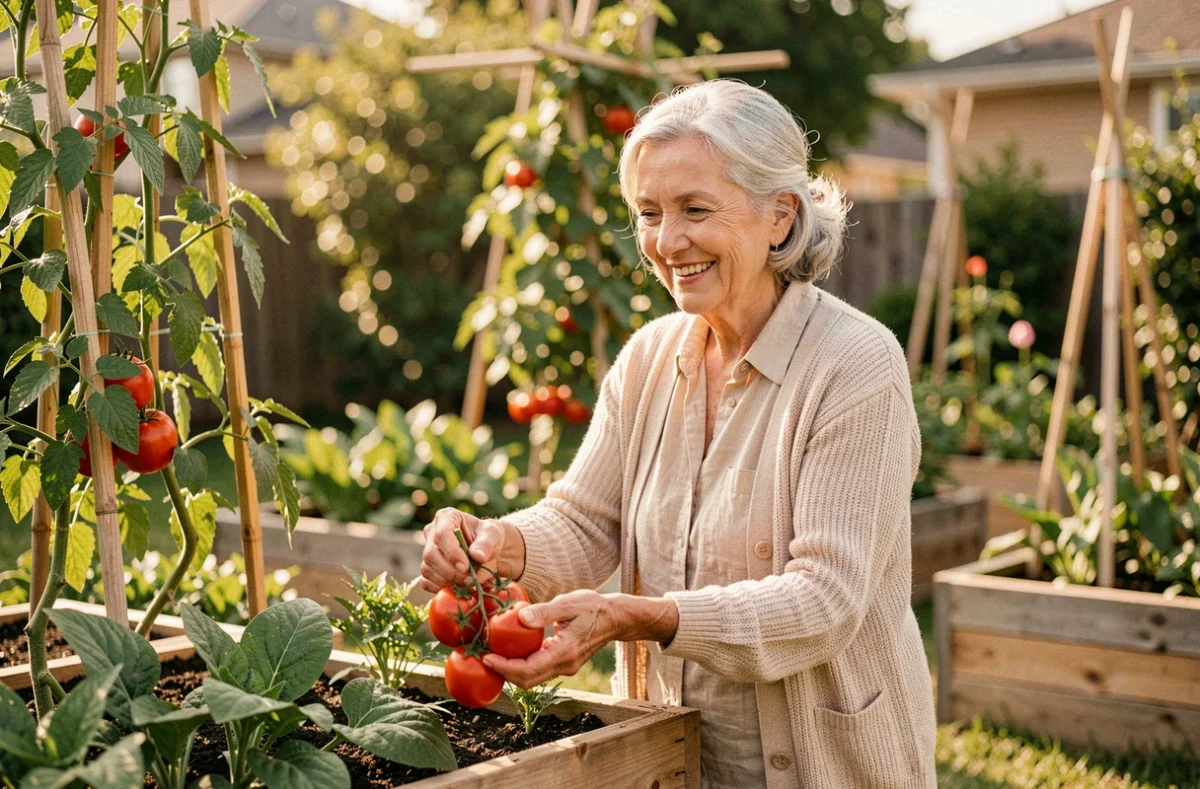
- Community gardening (moderate physical effort, planning, exchanges among participants).
- Guided hikes or nature outings (walking, observation, learning).
These activities produce an effect greater than the sum of their individual components. A retiree who walks alone for thirty minutes a day and does crossword puzzles in the evening engages fewer functions than a retiree involved in a hybrid activity two to three times a week.
Couple life in retirement: a rebalancing to anticipate
The transition to retirement abruptly changes the shared space within a couple. Two people who saw each other in the evenings and on weekends find themselves in constant proximity. This new closeness requires an explicit renegotiation of personal territories and times.
Maintaining distinct activities is not a sign of distance; it is a condition for preserving the desire for reunions. Couples who thrive in retirement are generally those who have defined, even informally, sanctified individual time slots in the week.
The financial aspect also weighs on the couple’s balance. When incomes decrease, tensions over spending choices increase. Setting a shared budget framework, with a personal allowance for each, reduces friction much more than case-by-case discussions.
Living well in retirement relies less on a list of best practices than on clarity regarding three realities: housing determines autonomy, financial security conditions serenity, and daily rhythm is actively constructed. Those who make early decisions on these three axes navigate this new life with a flexibility that others spend years trying to regain.